
Color and Composition
Learn to design paintings — then set color free.
What you’ll take into your practice
- Why composition problems — not color problems — are behind most paintings that don’t quite work
- How to generate original, interlocking shapes using Wendy’s everyday object tracing method
- How to build and test a color palette
- How to plan value distribution before paint touches the canvas
- How to layer watery washes and charged color across two painting sessions on raw canvas
- When and how to introduce opaque marks — and why black and white arrive last, even in the opaque stage
- How to assess and adjust — glazing, selective removal, and the eye that reads the work honestly
Who it’s for
- Artists who want to understand the design thinking behind their work, not just the color choices
- Beginners who want to start with a real process rather than learning to copy references
- Painters who feel their work lacks cohesion — where individual elements are fine but the whole doesn’t hold together
- Watercolor painters curious about what raw canvas and acrylics can do
- Self-taught artists who have never been shown how to design a composition from scratch
Inside the course
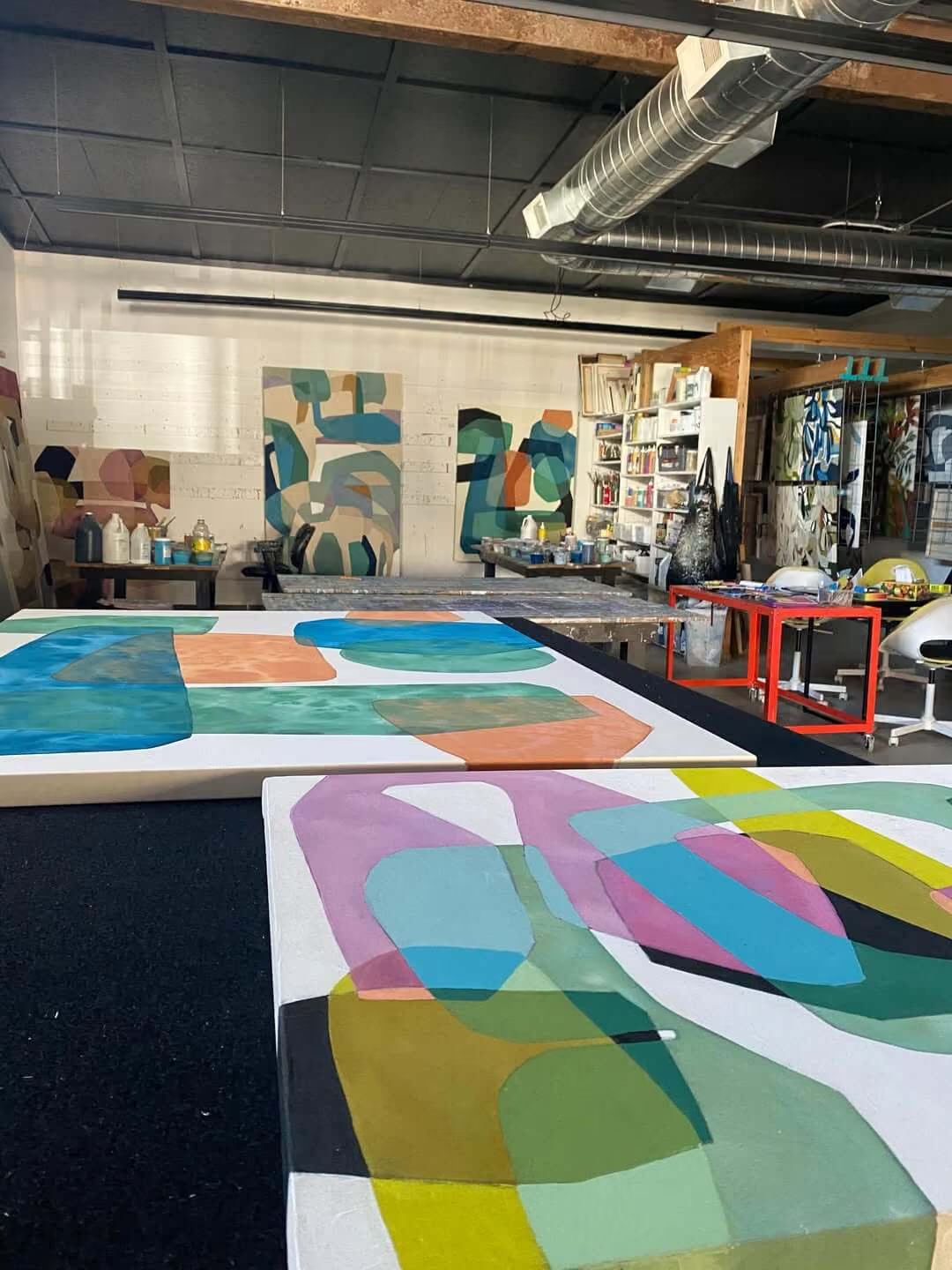
Step inside Wendy’s Minnesota studio and follow her complete process — from the first traced outline on tracing paper to the final opaque mark on raw canvas. This isn’t a follow-along painting class. It’s a design education for painters, built around Wendy’s conviction that structure is not the opposite of freedom — it is the source of it. Every module builds on the last, and by the time paint hits canvas, the hardest decisions are already made.
Wendy Westlake

Wendy Westlake
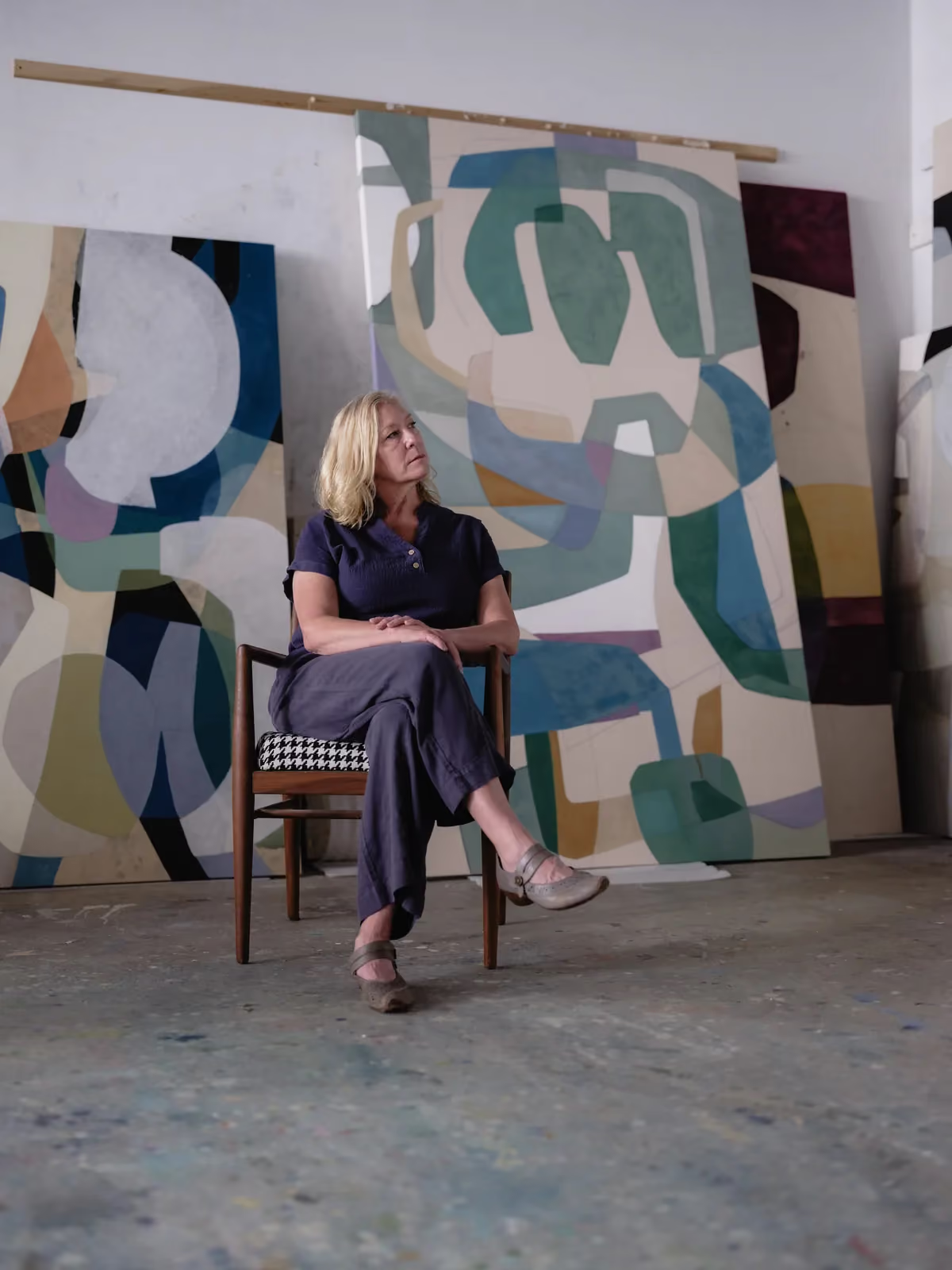
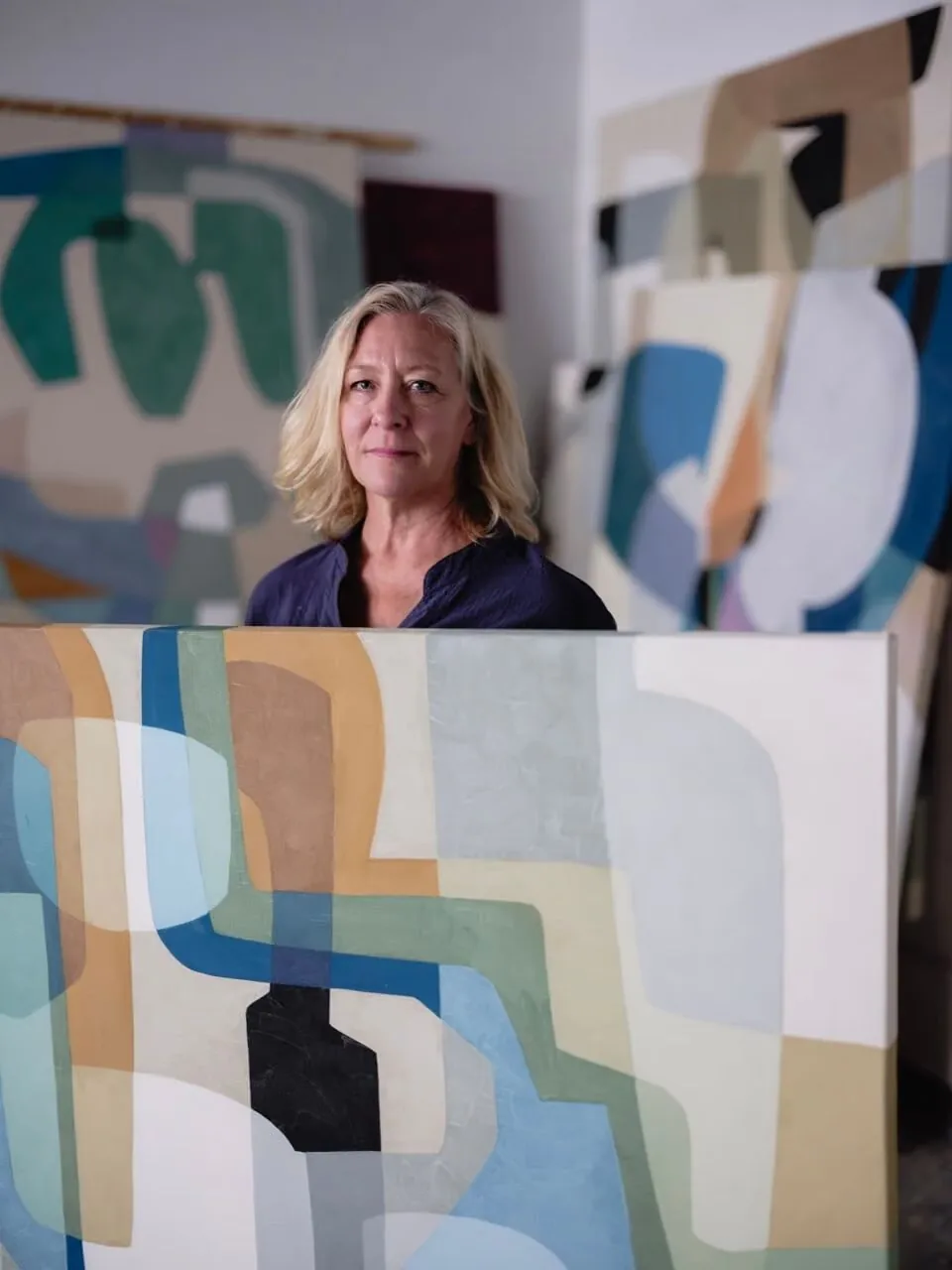
Wendy Westlake is a Minnesota-based abstract painter. She began as a watercolorist, serving as President of the Minnesota Watercolor Society, before moving to large-scale acrylics on raw canvas. That watercolor discipline is still the foundation: the watery washes, the transparency, the restraint.
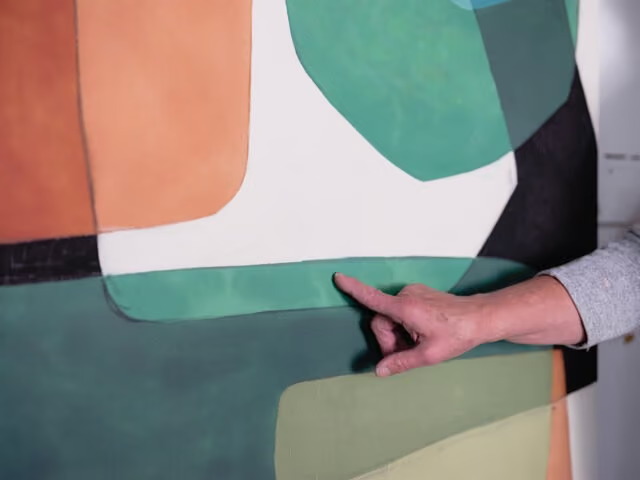
She paints primarily on raw, ungessoed canvas, working shape by shape with charged color and a restraint that gives her paintings their characteristic space and authority. Her work is represented by seven galleries across the United States, with solo exhibitions every year since 2017.
Color & Composition breaks her complete process into a structured, teachable course. Going Big shares how she makes the leap to working at scale.
Included with your course
- Downloadable materials list so you can gather everything before you begin
- Lifetime access to all 11 modules and 2 bonus modules
- Access to the private Arteway student community
- Ask Wendy questions directly in the comments
Before you begin
Raw (ungessoed) canvas, acrylic paints, a large angle brush, water-soluble pencils and crayons, tracing paper, and a few takeaway containers for mixing. Wendy walks through everything in Module 3 — nothing on the list is expensive or hard to find.
No. Wendy’s process is learnable from the beginning — she teaches the design thinking behind her work, not just the brushwork. If you can hold a pencil, you can follow this course.
Pre-recorded, so you can work through it at your own pace and return to any module whenever you need it.
Lifetime access. The course is yours to return to as many times as you like.
We offer a 14-day satisfaction guarantee. If the course isn’t right for you, contact us within 14 days of purchase for a full refund — no questions asked.
Yes. Color & Composition is built entirely around Wendy’s design-first approach — her watercolor roots, her proprietary shape-finding method, and her philosophy that composition must be resolved before color decisions are made. It’s a course about designing paintings, not just painting them.